My photographs fall into two main categories: landscape and human. I attempt to capture the sense of curiosity and fascination I have for the landscapes I am exploring as I search for clay and glaze materials. I want to convey the beauty a place has; it’s form, the light, the natural habitats and living things there, the layers there are – historic activity now only hinted at by a bank, ditch, soil heap…. and also the materials present that I may be able use to make small batches of ceramics. As I explore these places, I also wish to record the people who help me, either with the offer of access to materials, or in allowing me to capture their specific connection to the work I am pursuing – recently that has been through baking….. The photographs set the context for my work, setting the scene that the pots alone cannot achieve.
Category: Clee Hill Project
Pancheons
My connection with pancheons starts with a visit to the Piece Hall in Halifax, in 1985. There was a stall selling these beautiful, functional bowls for a few quid a piece, and I came away with two – one for my parents and one for me. I have treasured this bowl ever since. During my meanderings and exploration of Isaac Button’s old workshop site north of Halifax, I found rim shards from broken pancheons identical to mine, scattered around the area and along the bridleway that led down from the site (which was then being converted into apartments – or so I was told). The classic still photograph taken from John Anderson’s 1966 film, Isaac Button Country Potter, shows Isaac carrying a ware board with five medium pancheons – again identical to the one I bought all those years ago. Given that these forms were not stamped with a makers mark – I can only guess – or hope that, mine is one from this iconic workshop.
My pancheons are made primary from locally sourced, hand-dug clay (earthenware and stoneware), and echo the traditional forms associated with bread making, dairying and general home use (washing etc.) that were made in the centuries before plastics, pressed steel and other cheaper, more durable alternatives became widely available. They come in a variety of sizes, most commonly with a diameter of 35 cm and a height of around 15 cm.
Hare’s fur glaze?

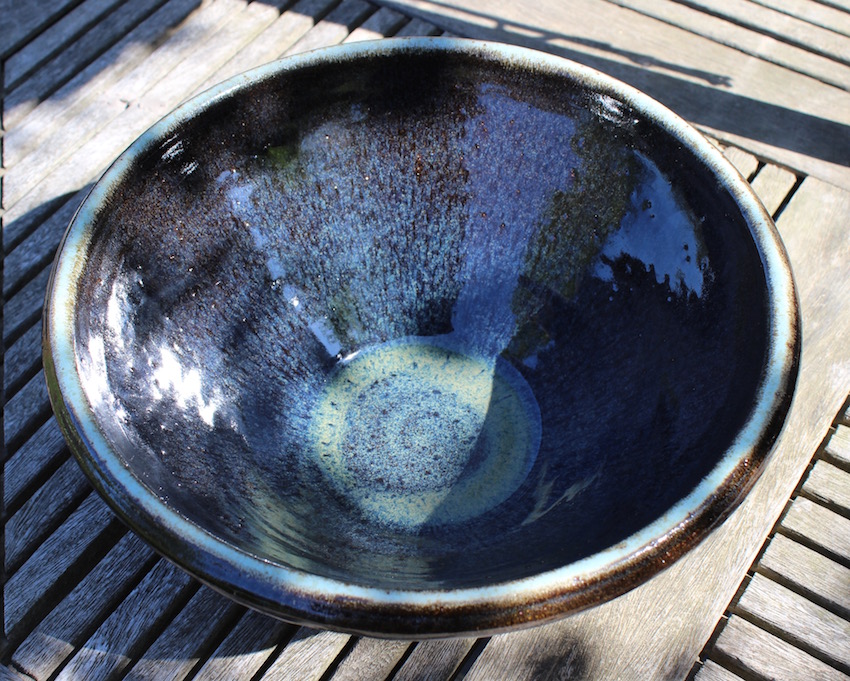
Today’s kiln opening revealed another Clee Hill pancheon (31cm this time) with a beautiful, almost “hare’s fur” / chun effect. The bubble in the glaze is not only creating a blue blush through the glaze, there is also a streaking that is reminiscent of hare’s fur glazes I have seen in Song dynasty (1127-1279 AD) Chinese ceramics. It is pure luck / chance that I have stumbled across this glaze effect using three readily available local ingredients with the addition of quartz (which I justify as being one of the most ubiquitous and commonly occurring minerals on the planet and certainly present around Clee Hill). The crucial application factor seems to be the combination of the exact mix of ingredients plus the thick application of the glaze. It has to be thick to the point where it actually leaves drying cracks after application to the biscuit fired bowl.
One hill, many clays and colours….
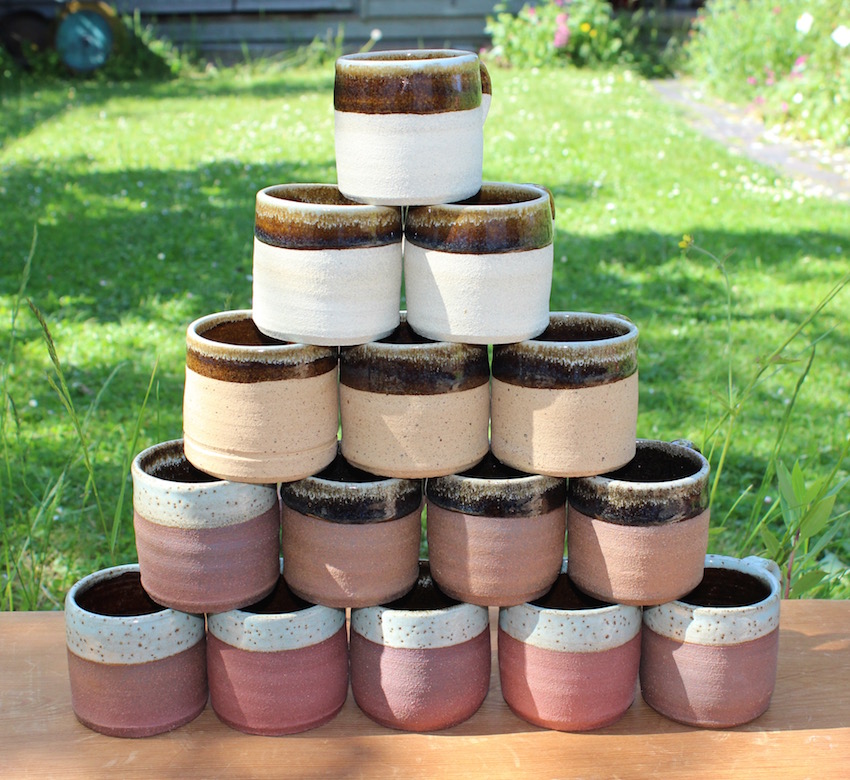
The last two years of investigating Clee Hill have led me to a number of clay sources. The fireclay from near the village of Clee Hill has provided the richest material; firing to deep dark reds and purples at stoneware temperatures. The sources recently sampled from the other side of the hill are proving to be full of opportunity too, firing well to stoneware temperatures, but being pale, “brick” clays. One fires to an ochrous range of tones, with an iron speckle, the other to more of a buff, grey tinged with apricot range. All of these clays shrink pretty dramatically (around 10%), and are also somewhat erratic – firing to subtly different shades in the same kiln, set for the same firing cycle / temperature etc.


Up on Clee Hill again:
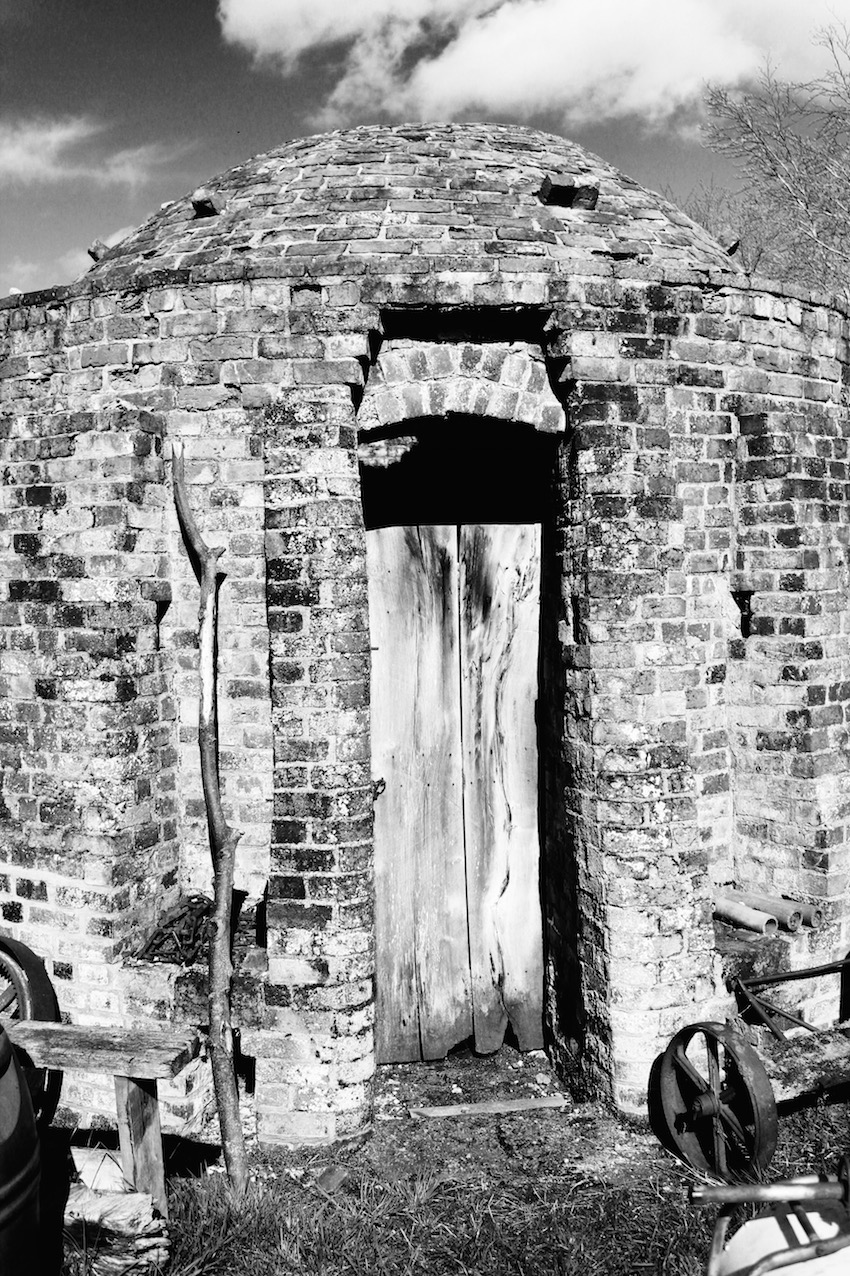
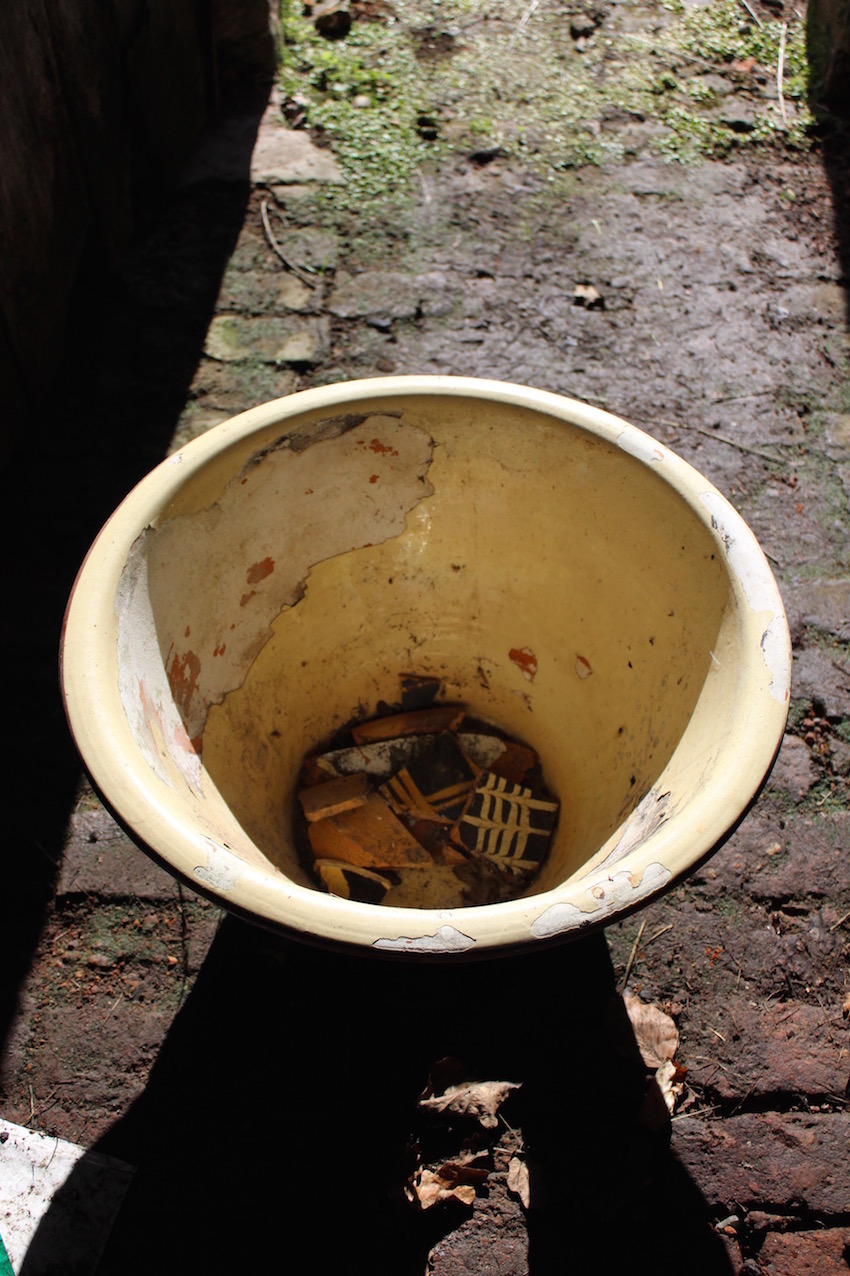
A fortnight or so ago now, the inspirational Alf Jenkins took me to meet the wonderful Neil and Karen, who farm over on the far north-west side of Clee Hill from Clee Hill village. Neil’s grand-father made bricks from clay on their farm and the beautiful Victorian era brick kiln, lovingly restored, still stands and is a wonder to behold – the last of its type in the West Midlands. Neil showed me some steens (pancheons) that he has – one stored inside the kiln, with it’s eye on the sky above – letting in shafts of morning light, and a couple in the basement of his farmhouse amongst the cider jars. These are steeper sided than Mr Button’s or the Buckley pancheon that I have – perhaps more for cream settling than baking? Neil very kindly gave me a bucket of his farm clay and we went to a ditch in a neighbouring field to collect some clay where recent digger excavations had exposed some beautiful blue material. I took both away and am in the process of firing these and glazing the results as a further project linked to this unique and evocative place (see upcoming post).