Clee Hill clay pancheons

Building up to my final MA assessment and show, I have been working with clays, landscapes and forms linked to baking. Much of my recent work has been focused on an area north of Halifax, close to Soil Hill and Isaac Button’s old pottery, but also continues to explore the wonders of Clee Hill in Shropshire.

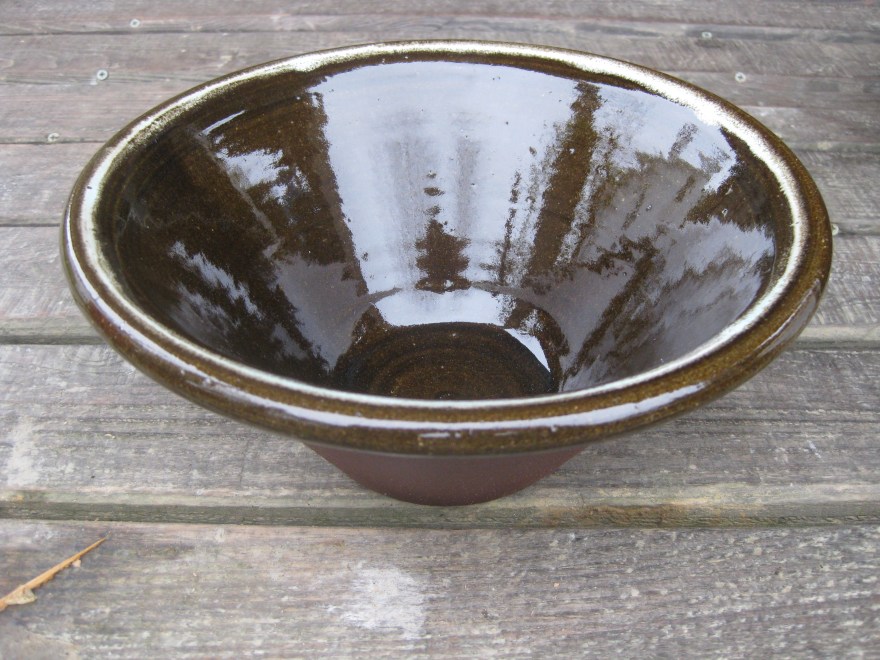
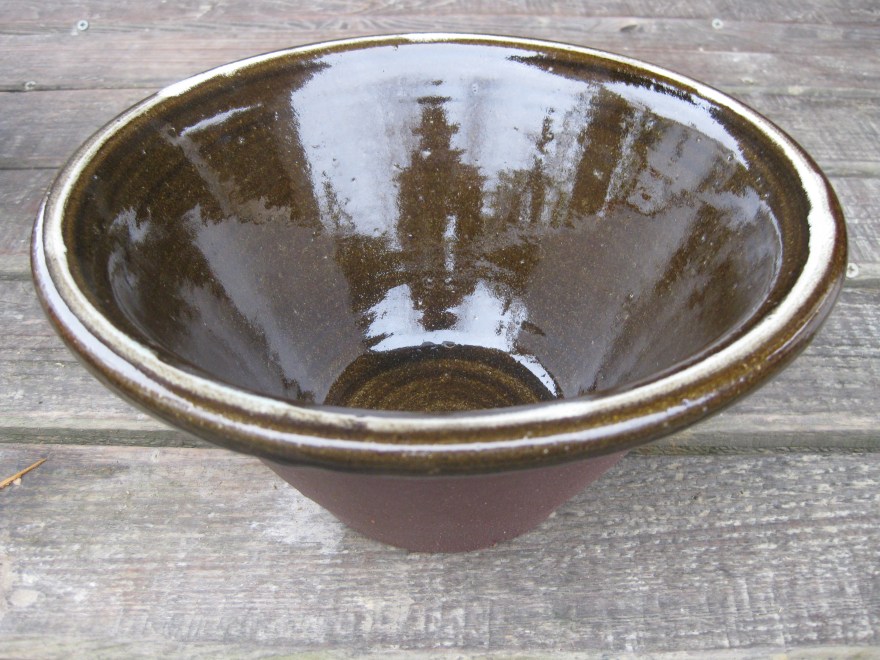
Here are two pancheons – forms traditionally used for mixing and rising dough or settling cream, made of my hand-dug and prepared Clee Hill fire-clay with a glaze of dolerite (from the hill top), local clay, wood ash and a small % of quartz.

IMG_1811IMG_1810

Project with Woodrow First School, Redditch. Sept 2015

This slideshow requires JavaScript.

In late June I was lucky enough to be invited to carry out a special project with Woodrow First School in Redditch, Worcestershire. The school is a wonderful, creative place of learning, with a focus on delivering their rich and varied curriculum through Mantle of the Expert approaches designed by Dorothy Heathcote. They also have an innovative reciprocal partnership with the Qattan Foundation teacher exchange programme based in Ramallah.

The project, which took place in the early Autumn 2015, aimed to investigate the red clay on which the school and town stands…. The connection is fairly obvious through the place-name – Red-ditch, but a quick investigation on the UK Soil Observatory website made the link even more concrete…. We decided to use the project to develop the children’s knowledge and understanding of materials and the way they change, linked to a wider theme of shelter (a good lead-in being the Three Little Pigs story….perfect for an introductory assembly which would include four year olds….). The outcome was to be a series of sawdust fired tiles.

As an additional outcome, we decided that I could turn our excavation site – i.e. our clay pit / marl-hole, into a wildlife pond.

The project was really successful in engaging two classes of Year 3 children (7-8 year olds) over a full week, all of them helping with the testing (ring tests), blunging, sieving, tile making, decoration (printing key words linked to shelter), kiln preparation and initial lighting (the kiln burned over the weekend)… The ground was way too hard, with an arm breaking compacted stony layer, to involve them in the actual digging, but they were witnesses to the digging and drying on large plaster slabs…..

The children have decided to use their tiles to protect the roof of a hedgehog house that is now placed in their wildlife and growing area, next to the pond. Some of the tiles were also given to exchange teachers from Palestine on the Monday morning after the weekend sawdust firing. Perhaps one of the most profound moments was the response to the watching of John Anderson and Robert Fournier’s 1965 film about Isaac Button. This silent, black and white film, lasts for over 30 minutes. I thought we might show a clip of about 4-5 minutes. The children recognised the processes they had been in engaged with immediately, and were spellbound for the full half-hour. “He makes it look so easy” was a memorable quote….especially when they had seen how hard the preparation process was, how heavy clay is as a material, how difficult it is to form, how sensitive it can be on firing (we had different coloured tiles from oxidising and reduction conditions)….

Huge thanks to Richard Kieran (Headteacher), Seb Benney and all at Woodrow First School for giving me the chance to work with them on this project.

 

Back up on Clee Hill, May 2015

I went up to Clee Hill a week or two ago to dig some more clay. It was a beautiful late May morning and I followed the digging with a walk from Clee Hill village, up around Titterstone Clee Hill and the abandoned quarries there. The place is so evocative – at once ugly and littered with remnants of human activity, past and present…. and yet wild and beautiful with incredible views. What a place…. where the destructive clumsiness of human endeavour meets wilderness – and desolation meets the skylark’s optimism…..

Pots in the gallery! Visit to Tate Britain, 11th May, 2015.

At a recent seminar (21st April 2015), it was posited that perhaps the Modernist period of the 1920s and 30s was the closest ceramics came to true recognition within the world of Fine Arts, when Bernard Leach, William Staite-Murray and Katherine Pleydell-Bouverie were in their prime. The new Tate Britain display of pottery in the 1910-1930 room supports this view. I’m intrigued, the Tate web-site also includes a forum for debate on When is craft  an art? introduced by Kirstie Bevan (in 2011) who opens the piece with an explanation that it was the rise of artists such as Grayson Perry and publication of works such as Richard Sennet’s The Craftsman (2009) that has prompted the “resurgence” of interest. However the pervading view seems still to suggest that pottery and “ceramics” are not truly at home as art – or certainly not fine art? It was interesting that the display case in question is poorly lit and the pots on display, whilst maybe fine in their own right, look insignificant and slightly dowdy, almost cementing the point that these are pots, not art? When I arrived at the Tate that morning, I asked at the information desk where the display might be found (I had only heard a rumour of it’s installation!). The lady at the desk was very helpful, but her first response was “pots, pottery…..no, I don’t think so!” She then looked through her guide and reference books – to no avail…. Guerrilla ceramicists active within the Tate curatorial division – I wonder? These “silent pots” ( see de Waal 2004 ) do not convey any meaning on their own, they are pots; vases, bowls, jars. Perhaps it is the concentration on form and material within Modernism – which fits with part of the Tate’s own definition of the movement – Modernism refers to the broad movement in Western art, architecture and design which self-consciously rejected the past as a model for the art of the present, and placed an emphasis on formal qualities within artworks and processes and materials…… that justifies their presence. De Waal, E. (2004) Speak for Yourself. Interpreting Ceramics. Issue 5. http://interpretingceramics.com/issue005/speakforyourself.htm


Investigating clay with Year 4 class at a Redditch First School….

Last week I visited a First School in Redditch (Worcestershire) that I may do some work with this Autumn – linking work with clay as a material to themes in sustainability as they work towards their Eco Schools Green Flag Award. The children (8-9 year olds), were fascinated by the stuff I brought in…. “Is this the clay part?” (referring to the coarse base of a bowl), “What’s this shiny stuff?” (wondering about the glaze…)… They were intrigued to think that the material the bowls were made of, might be similar to clay under their school (a quick reference to the UK Soil Observatory website had confirmed before my visit that then geology beneath the school was mudstone / claystone – which was promising). Whilst the class did PE, I dug a couple of trial pits in an area of rough grass in their school grounds, and having gone through a shallow topsoil and stony layer, found the profile change to one with a higher clay content. The ring test didn’t work out in the field – by this time the children were over with me and quizzing me on what I had found. They were full of questions about treasure (had I found any?) and the soil itself. Having taken a couple of small samples in sample bags, we retired to the classroom to add a little water – and things looked more promising still, as the samples became stickier and more plastic. Having returned to my studio, I sieved the sample first through a kitchen sieve (to remove grit / stones), and then through a 60 sieve (to remove the larger sand / silt particles), and the result, dried on a plaster slab, was a wonderful plastic material – with a successful ring test. I’m hoping the school may want to take this investigation further, but that’s entirely up to them. It was however, great to see the children’s fascination….